How to install widgets using Google Tag Manager
Getsitecontrol is a popup builder and email marketing platform that lets you create and manage widgets on your website without editing its code.
If you’re using Google Tag Manager, you can install Getsitecontrol by adding the dedicated tag to your GTM workspace. This allows you to add the Getsitecontrol script to your website without modifying its code. You only need to do this once.
Once the tag is installed, you’ll be able to create, edit, and publish widgets on your site directly from the Getsitecontrol dashboard. Follow the steps below to install Getsitecontrol using Google Tag Manager.
Add a new tag to GTM
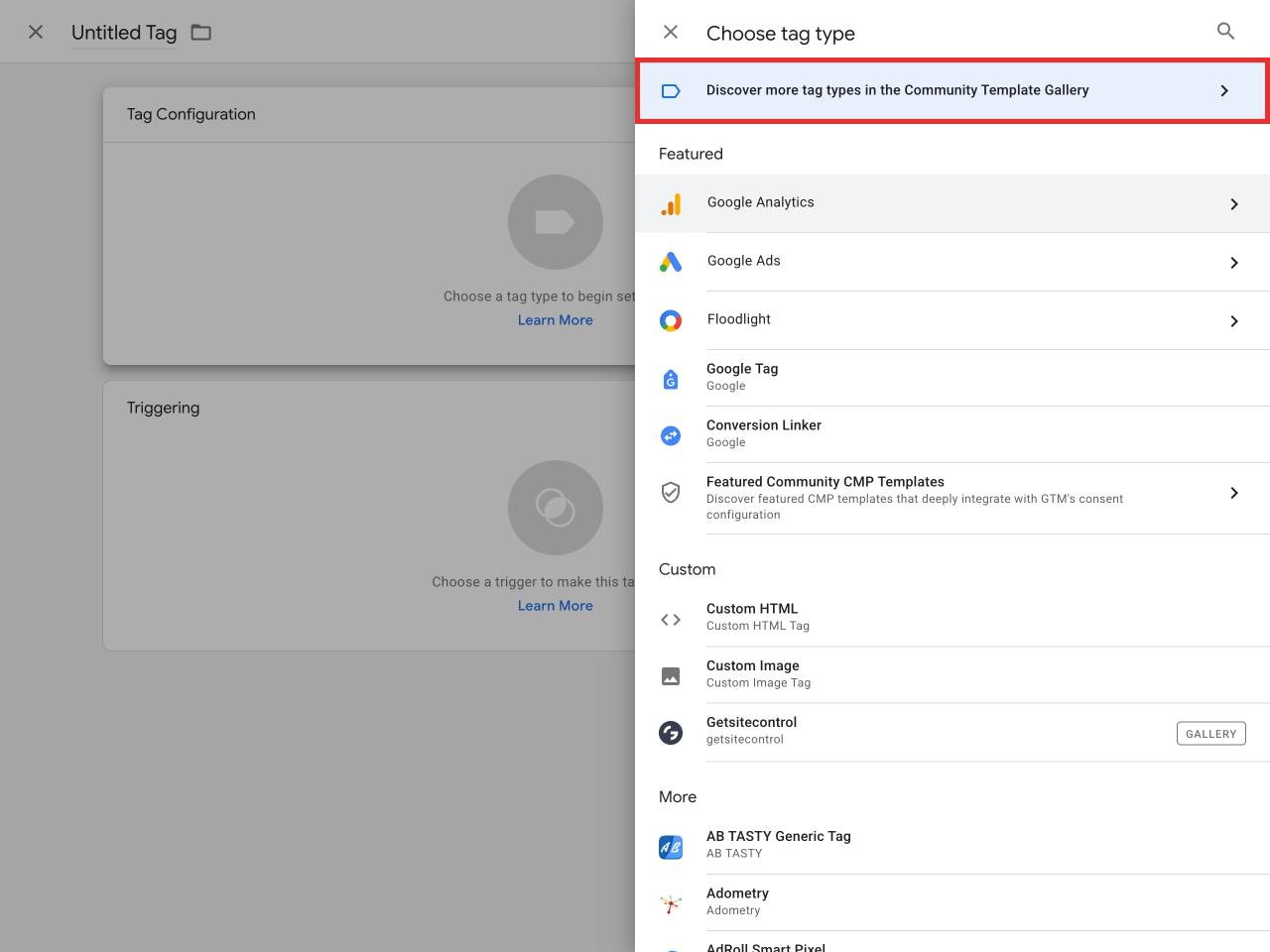
Assuming Google Tag Manager is already installed on your website, open it and click New Tag. In the Tag Configuration section, select ‘Discover more tag types in the Community Template Gallery’.
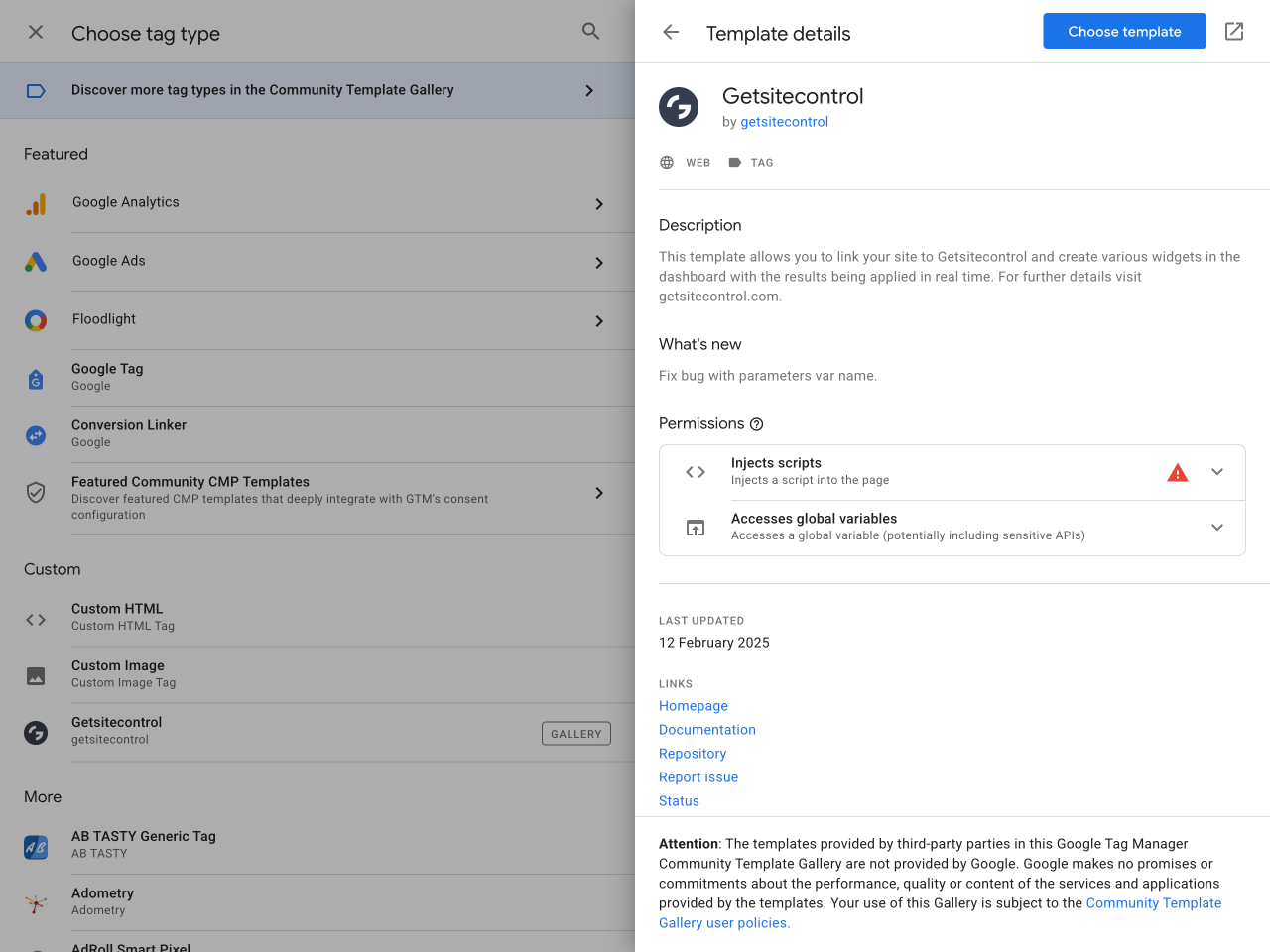
Scroll down or use the search option to find Getsitecontrol in the list, then click it. Next, proceed to Choose template and confirm adding the tag.
Get your Site ID
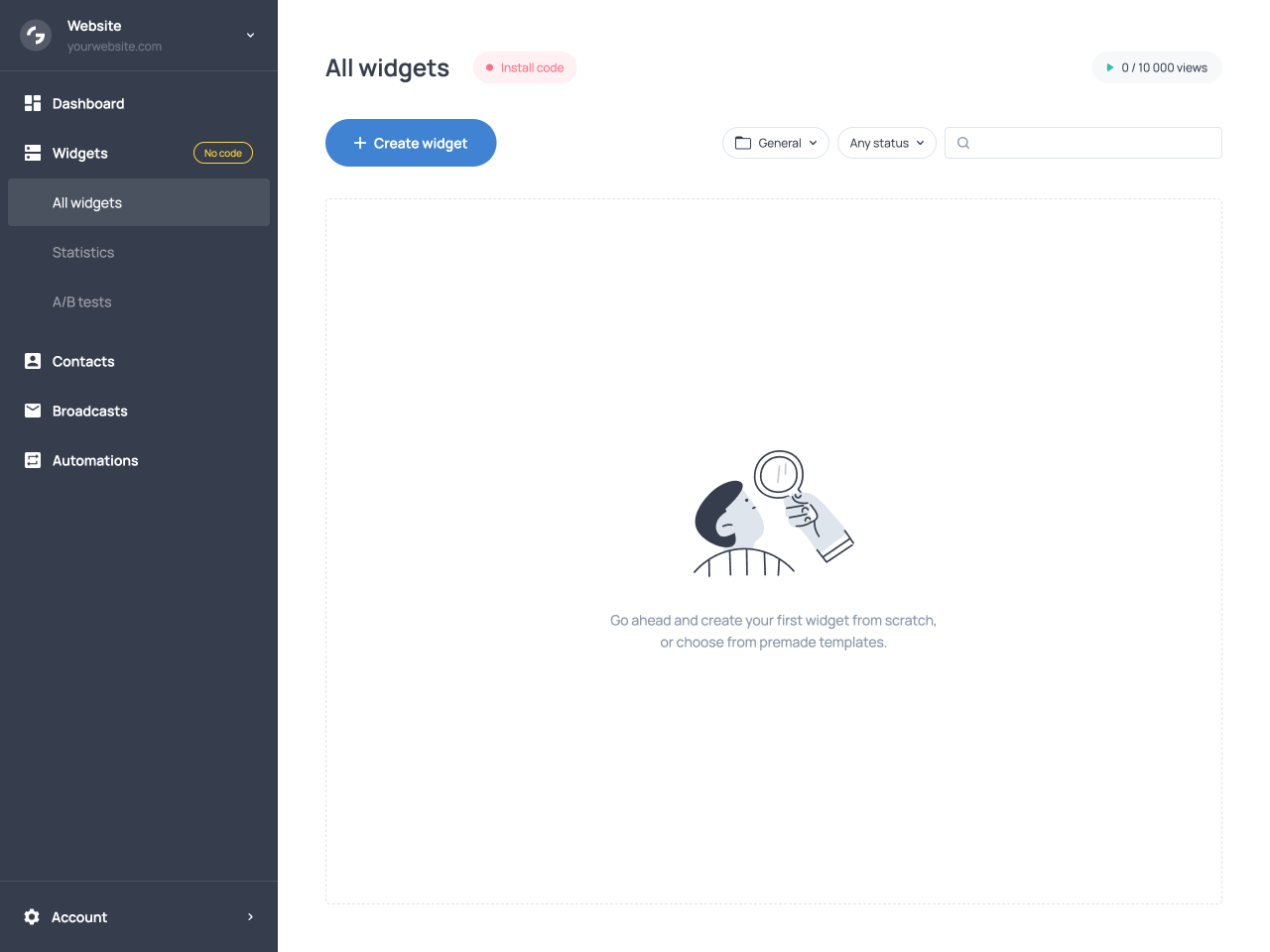
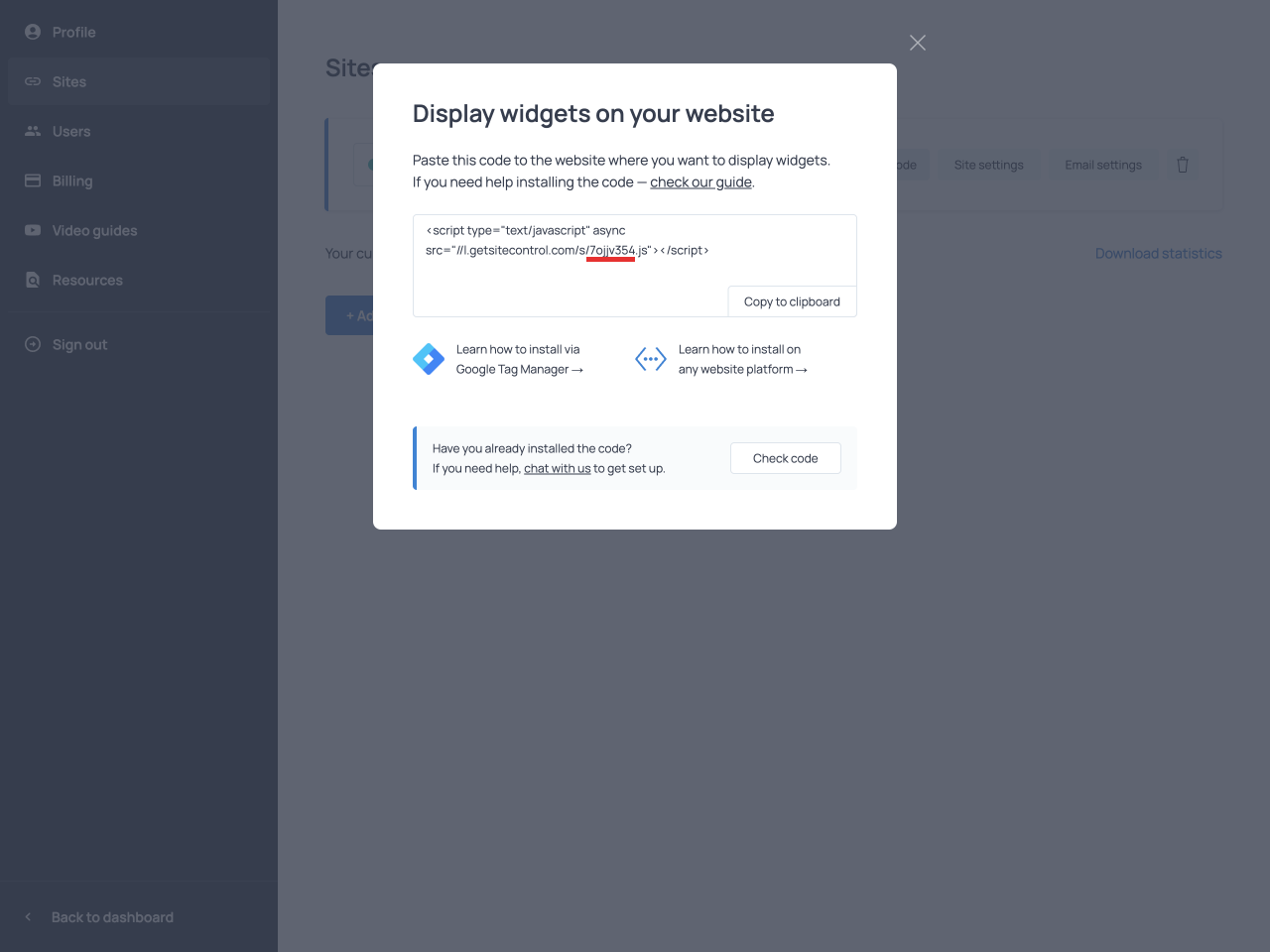
To connect your site to Getsitecontrol, specify your site ID in the tag settings. To find your site ID, open the Getsitecontrol dashboard. Go to the All widgets section and click Install code at the top of the page.
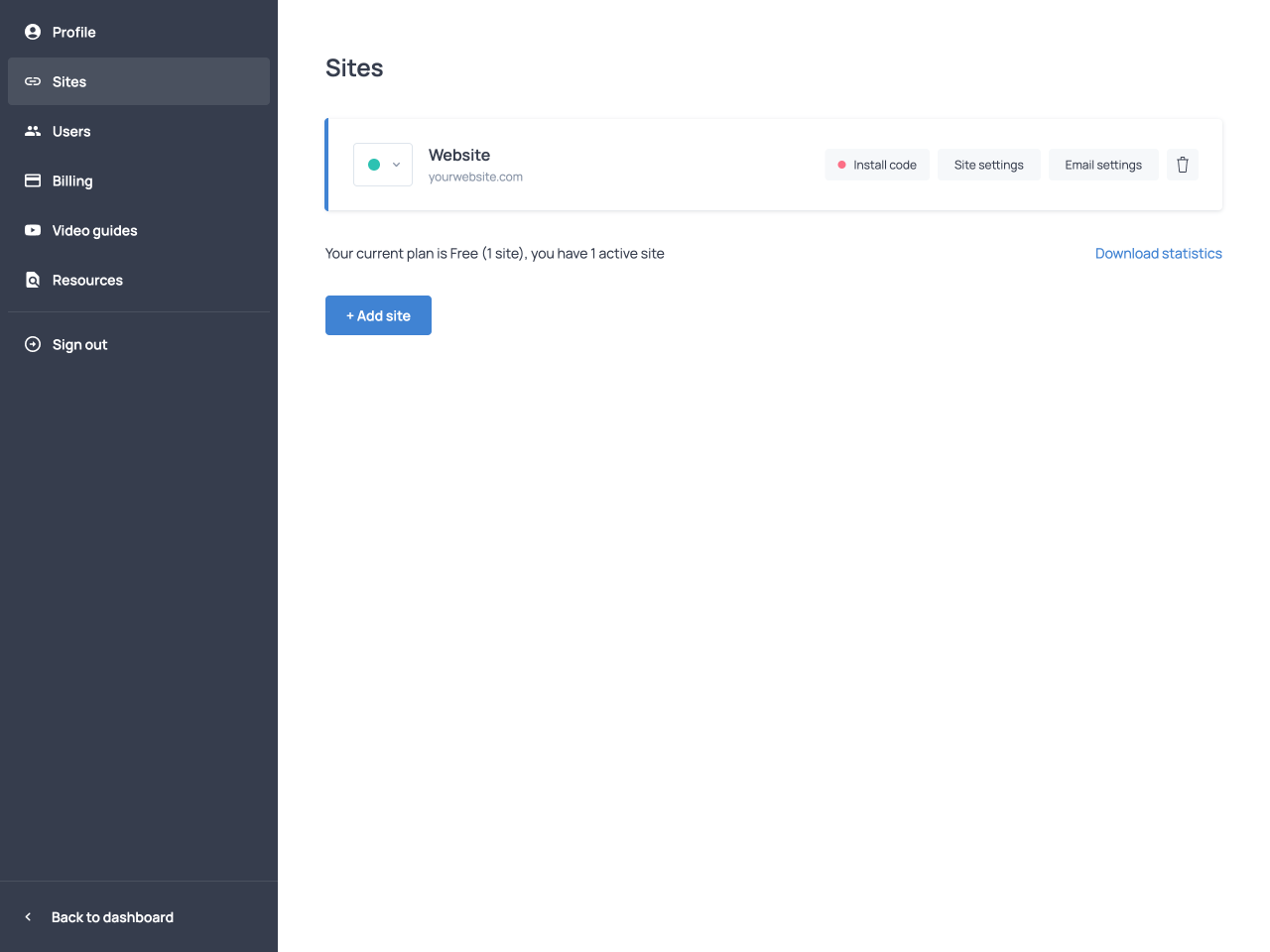
If you can’t see the Install code button in the All widgets tab, visit the Sites section of your dashboard. Click Account at the bottom of the panel on the left, and proceed to Sites. You’ll find the Install code button next to your website.
In the installation window, you’ll see your Getsitecontrol script. The script contains a unique site ID, which is a short sequence of letters and numbers, for example, 7ojjv354. Find and copy your site ID.
Add the ID to the GTM tag
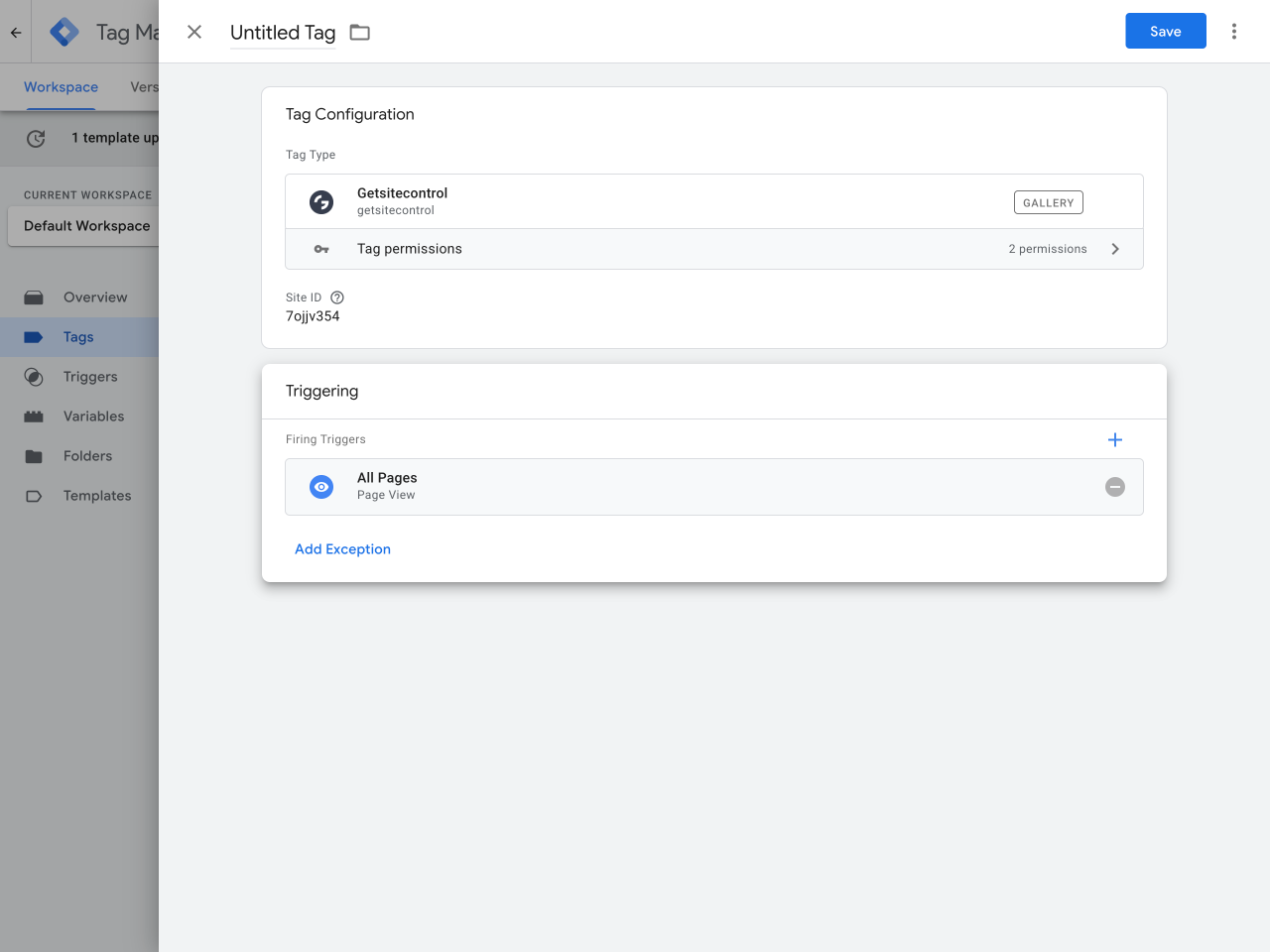
Paste the ID into the Site ID field of the tag you have created in Google Tag Manager. In the Triggering section below, choose to fire the tag on All Pages.
Save and publish the changes
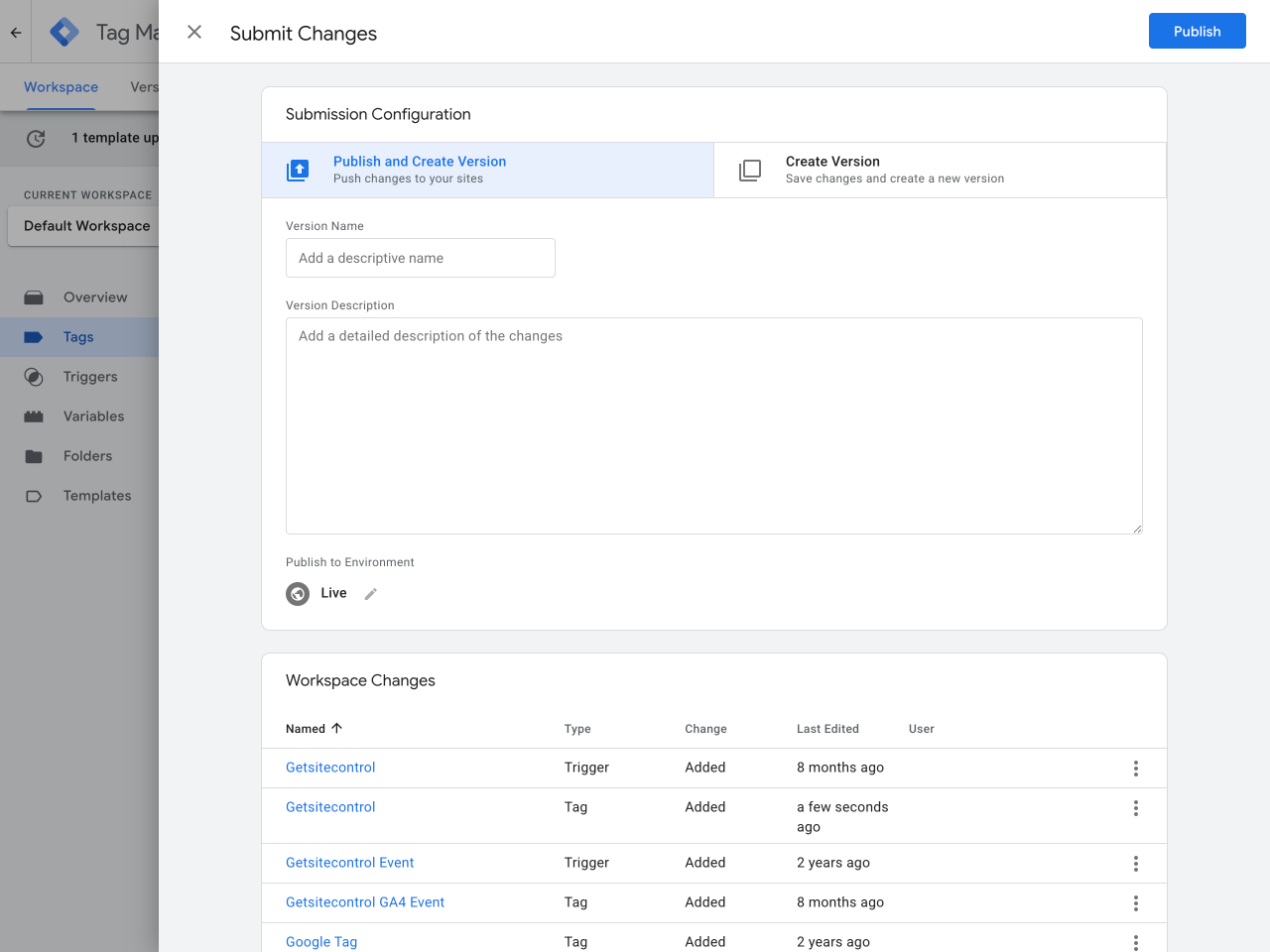
Rename your tag and click Save. To make the tag live on your website, click Submit in the top-right corner of Google Tag Manager and then Publish. Once published, the Getsitecontrol script will start loading on your website on all pages.
Check the code
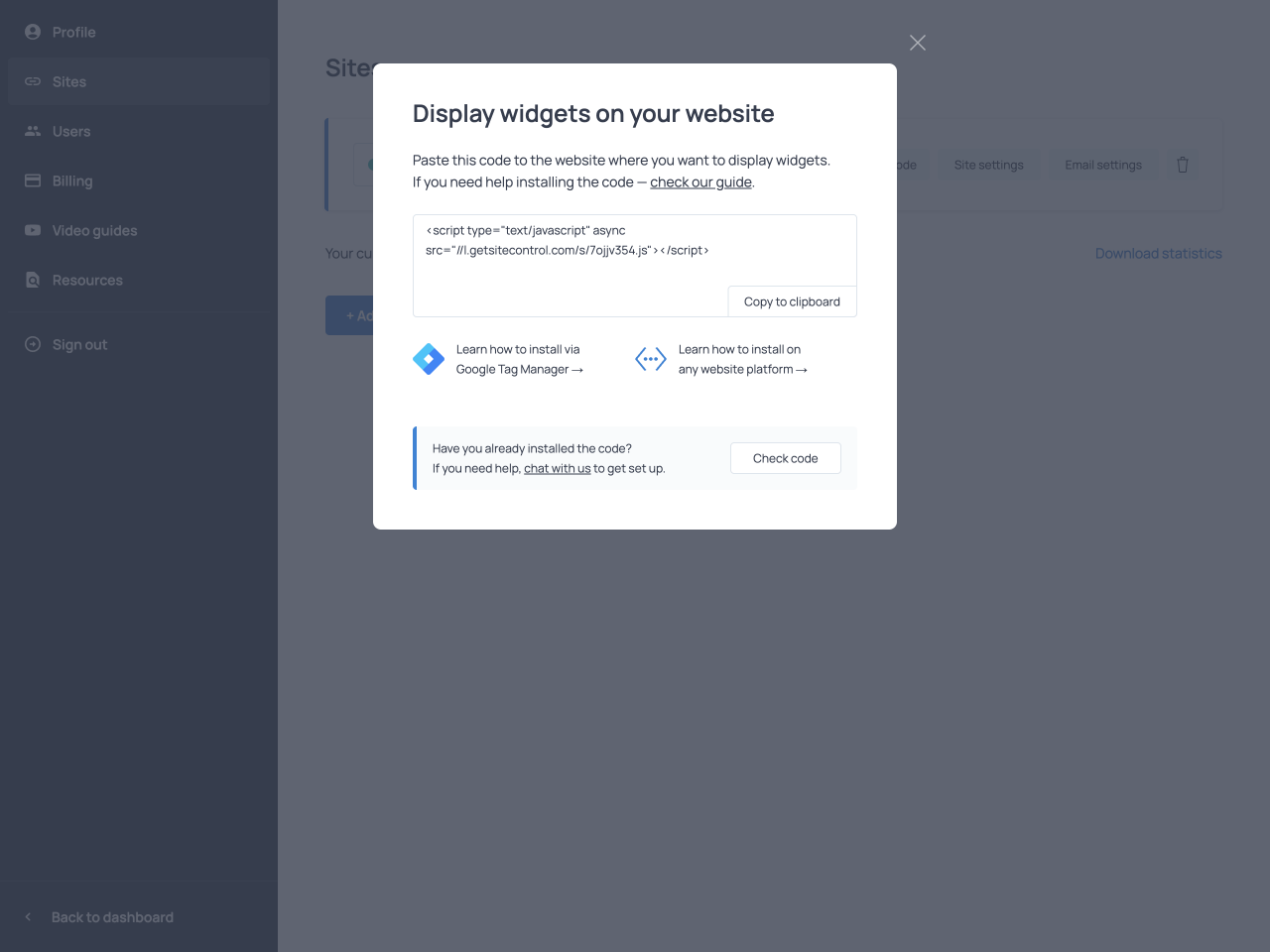
Go back to the Getsitecontrol dashboard and click Check code from the installation window. The system will confirm that the script is correctly installed on your website. You can now create and manage widgets directly from your Getsitecontrol dashboard.
If you still see the ‘Code snippet is not installed’ message after completing the steps above, it likely means the system needs more time to verify the installation. This message doesn’t affect how Getsitecontrol works, and it will disappear automatically after you create and publish your first widget.
Troubleshooting
If your widget doesn’t appear on the website after completing the installation process via GTM, it’s usually due to one of the common issues listed below. Review the table to identify the cause and where to check in your dashboard or GTM settings.
| Common cause | Where to check |
|---|---|
| The GTM container is not installed or not loading on your website | Verify that the Google Tag Manager container code is added to your site and loads on all pages. Use Preview mode in GTM to confirm. |
| The Getsitecontrol tag was added to the wrong container | In your GTM account, check that you’re working in the correct GTM container associated with your website domain. |
| The tag changes haven’t been published | In GTM, click Submit and then Publish to apply the changes to your live site. |
| You don’t have permission to publish changes | Check your GTM user permissions. You may be able to submit changes but not publish them; ask an admin to publish the container version if needed. |
| The tag is not set to fire on the correct pages | Open the tag settings in GTM and ensure the trigger is set to All Pages (or the pages where the widget should appear). |
| The widget is inactive | Go to the All widgets section in your Getsitecontrol dashboard and make sure the widget is activated. |
| Targeting conditions are not met | Review the widget’s Targeting settings (URL, device, audience, etc.) and make sure you’re testing under the correct conditions. See the Targeting guide. |